Septic Alarm Going Off? What It Means and What to Do
A septic alarm going off is designed to get your attention, and it’s worth listening to. Here’s what different alarm situations usually mean, and what to actually do in the first few minutes after it starts.
Not Every System Has One — But a Lot of Buncombe County’s Do
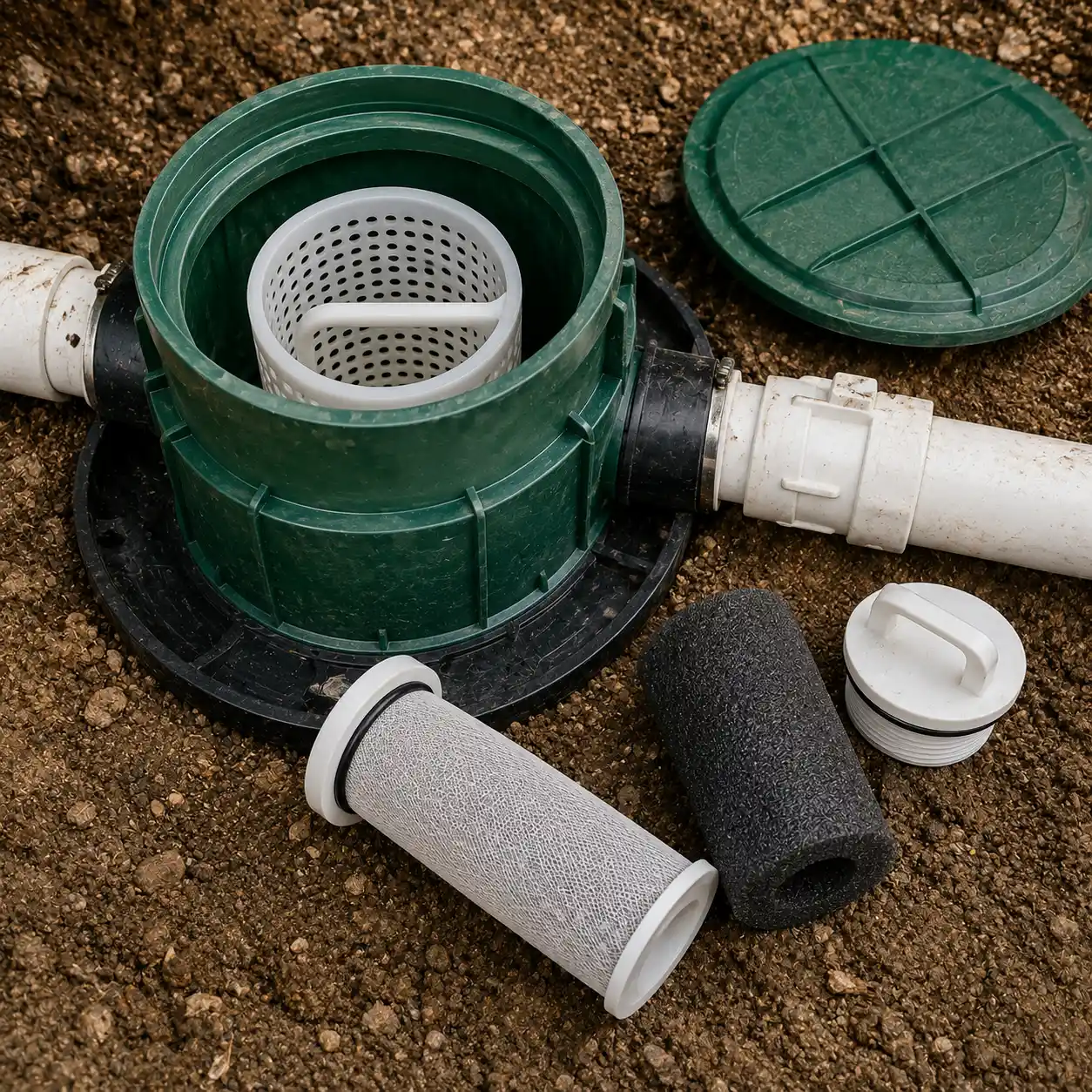
Standard gravity-fed septic systems don’t have alarms, because there’s no pump or electrical component to monitor. But a significant share of properties around here run pressure-dosed systems, pump chambers, or other engineered designs — a direct consequence of the area’s slope and shallow soil — and those systems almost always include an audible or visual alarm tied to a float switch in the pump chamber.
If your alarm’s going off for the first time, the first thing to know is that it’s doing exactly what it’s supposed to do: telling you something in the chamber has changed before it turns into a bigger problem. What it’s actually telling you depends on a few possibilities.
It’s also worth knowing that not every property owner realizes their system has a pump and alarm at all, especially if they bought the house from someone who never mentioned it or didn’t fully understand it themselves. If you’ve just moved in and heard an unfamiliar alarm for the first time, that’s a normal thing to be unsure about — the panel is usually mounted somewhere visible, like a garage wall or an exterior utility area near where the pump chamber sits, and it’s worth locating and understanding before you actually need it.
Most alarm panels include both a light and a horn, and the two can mean slightly different things depending on the manufacturer — some units use a steady light for a routine high-water condition and a flashing light or distinct tone for something more serious, like a confirmed pump failure. If your panel has a manual or a label explaining what the different signals mean, it’s worth a quick look before an alarm ever goes off, rather than trying to decode it for the first time in the middle of an active situation.
Why the Alarm Is Sounding
The Pump Has Failed
Pumps have a working lifespan, and eventually they wear out or fail outright — sometimes gradually, sometimes all at once. When the pump stops moving effluent out of the chamber the way it should, the water level rises to the point where the float switch trips the alarm. This is one of the more common causes of a sustained alarm, especially on an older system that’s never had the pump replaced.
A Power Interruption
If the pump loses power — a tripped breaker, a blown fuse, or a broader power outage — it can’t run even if it’s in perfect working order. The chamber keeps filling from normal household use, and once it reaches the float’s trigger point, the alarm sounds, often on its own separate backup power source so it can alert you even during an outage.
A Stuck or Malfunctioning Float Switch
The float switch itself can fail — getting physically stuck, coated in buildup, or wired incorrectly after a repair — and either fail to trigger the pump when it should, or trigger a false alarm when the water level is actually fine. This is less common than a pump or power issue but is worth ruling out if the pump appears to be running normally and the chamber doesn’t seem unusually full.
The System Is Being Overloaded
Occasionally the alarm goes off not because anything’s broken, but because water is entering the chamber faster than the pump can reasonably keep up with — a house full of guests running several loads of laundry in one day, for example. In this case, the alarm resolves itself once water use returns to normal, though it’s still worth having the system checked if it happens more than once.
A New Fixture or Appliance Added Without Reassessing Capacity
A finished basement with an added bathroom, a new hot tub, or a second washing machine all add real water volume that the original system design may not have accounted for. If your alarm started tripping around the same time as a renovation or a new appliance, that timing is a meaningful clue — the pump and chamber may simply be undersized for what the house now sends their way, rather than anything being broken outright.
What to Do Right Now
Cut Back on Water Use Immediately
As soon as the alarm sounds, the most useful thing you can do is stop adding water to the system — hold off on laundry, dishwashing, and long showers until you know what’s actually happening. This buys time and reduces the chance of an actual backup while you figure out the cause or wait for help.
Don’t Ignore It, Even If It Stops On Its Own
Some alarms include a silence button that mutes the audible signal without addressing the underlying cause. If you silence it and the warning light stays on, or the alarm comes back within a day or two, treat that as confirmation something needs attention rather than a problem that resolved itself.
Know When It’s an Emergency vs. a Same-Week Call
An alarm that’s paired with visible sewage backup, standing water near the chamber, or a smell inside the house is worth treating as an emergency. An alarm on its own, with no other symptoms and water use already reduced, can usually wait for the next available appointment — though it shouldn’t wait indefinitely, since an ignored pump failure eventually does lead to backup.
Check the Breaker, If You Know Which One It Is
If you know which breaker controls the septic pump — it’s often labeled, though not always — a quick check to confirm it hasn’t tripped is a reasonable, safe step to take on your own. If it has tripped and resetting it clears the alarm, that’s useful information for whoever eventually looks at the system, since a breaker that trips repeatedly points toward a deeper electrical or pump issue rather than a one-time fluke.
Alarm Going Off and Not Sure Why?
Tell us what you’re seeing and we’ll help you figure out if it’s urgent.
Schedule a Diagnostic Visit
Serving Asheville and all of Western North Carolina.
What We Check When We Come Out
We start with the obvious — confirming power is actually reaching the pump, since that rules out or confirms the simplest cause fastest. From there, we check the pump itself for signs of failure, test the float switch’s actual trip points, and look at how full the chamber is relative to where it should be.
If the pump has failed, replacement is usually straightforward, and most pumps have a limited working lifespan that’s worth knowing so you’re not caught off guard by the next failure. If everything mechanical checks out and the alarm was overload-related, we’ll talk through what happened and whether it points to a system that’s simply sized too small for how the household actually uses water.
Preventing Alarm Trips Going Forward
Routine maintenance is the best defense against surprise alarm trips — a pump chamber that’s checked periodically tends to have problems caught before they trip the alarm rather than after. If your system’s pump has never been serviced or you don’t know its age, that’s worth finding out before it fails on its own schedule instead of yours.
If your alarm keeps tripping during predictable high-use periods — holidays, guests, a specific weekly laundry routine — that’s useful information, not just an annoyance. It can mean the system’s original design didn’t fully account for how the property’s actually used, which is worth discussing rather than just resetting the alarm every time it happens.
Most pumps have a working lifespan somewhere in the range of seven to ten years, though that varies with usage and how well the system’s been maintained overall. If you don’t know your pump’s age and the system came with the house, it’s a reasonable thing to ask about at your next routine visit — knowing you’re approaching the end of a pump’s expected life is a lot more useful than finding out the hard way, in the middle of a holiday weekend with a house full of guests.
A backup battery for the alarm panel itself is also worth checking periodically, separate from the pump. The alarm’s whole purpose is to warn you during exactly the kind of situation — a power outage, an electrical fault — where you’d most need it to work, and a dead backup battery defeats that purpose quietly, with no way of knowing until the moment it actually matters.
Get Your Alarm Checked
Pump failure, a power issue, or a system that’s simply outgrown its design — fill out the form and we’ll figure out which one you’re dealing with.
- Pump & float switch diagnosis
- Chamber inspection
- Pump replacement
- System capacity assessment
- Preventive maintenance scheduling
- Serving all of Buncombe, Henderson, Madison & Haywood counties
Tell Us About Your Needs
We’ll reach out to confirm your appointment details.