Grease Trap Cleaning in Asheville, NC
Asheville’s restaurant and brewery scene runs on kitchens that produce a lot of FOG — fats, oils, and grease — and every one of them needs a trap that’s actually maintained, not just installed and forgotten. We clean and service traps on a schedule sized to your kitchen’s real output.
Compliance-Focused
Flexible Scheduling Around Service Hours
Schedule Grease Trap Service
Why Grease Traps Need Real Maintenance, Not Just Installation
A grease trap works by slowing down wastewater long enough for fats, oils, and grease — FOG — to cool, solidify, and float, while heavier food solids settle to the bottom. That separation only works while there’s enough open capacity in the trap for the water to actually slow down. As FOG and solids accumulate, that capacity shrinks.
Once a trap gets too full, it stops doing its job — grease starts passing through into the line downstream instead of staying captured. That’s when kitchens see slow drains, backups, and in some cases discharge violations if the property is on municipal sewer, since most municipalities regulate how much FOG can enter the system.
The rule of thumb is servicing a trap once it’s about a quarter full of accumulated grease and solids — for a busy kitchen in Asheville’s restaurant corridor, that can mean monthly service; for a lower-volume operation, every couple of months might be enough. We assess actual usage rather than applying a blanket schedule to every account.
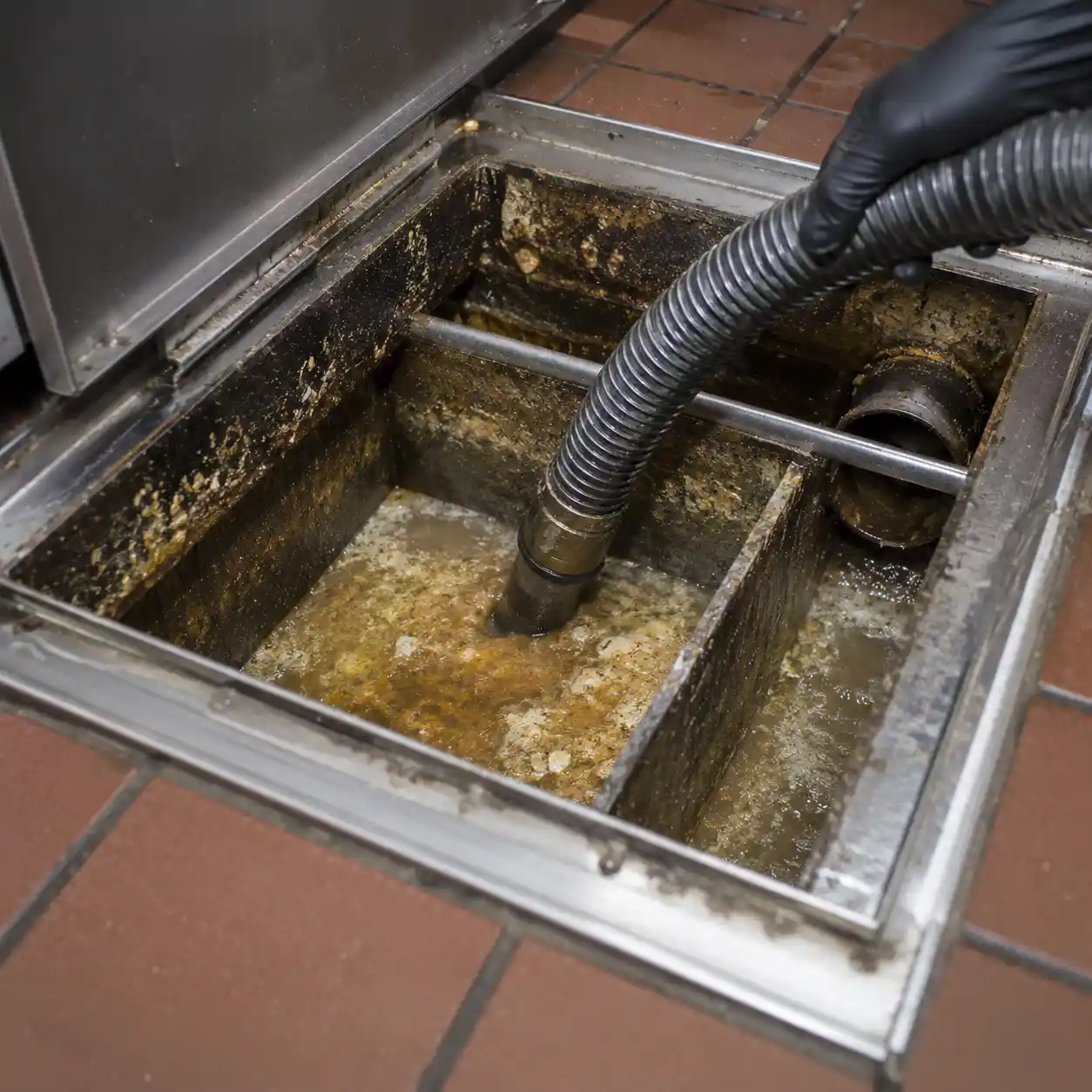
What a Grease Trap Service Visit Covers
A full service, not just a quick pump.
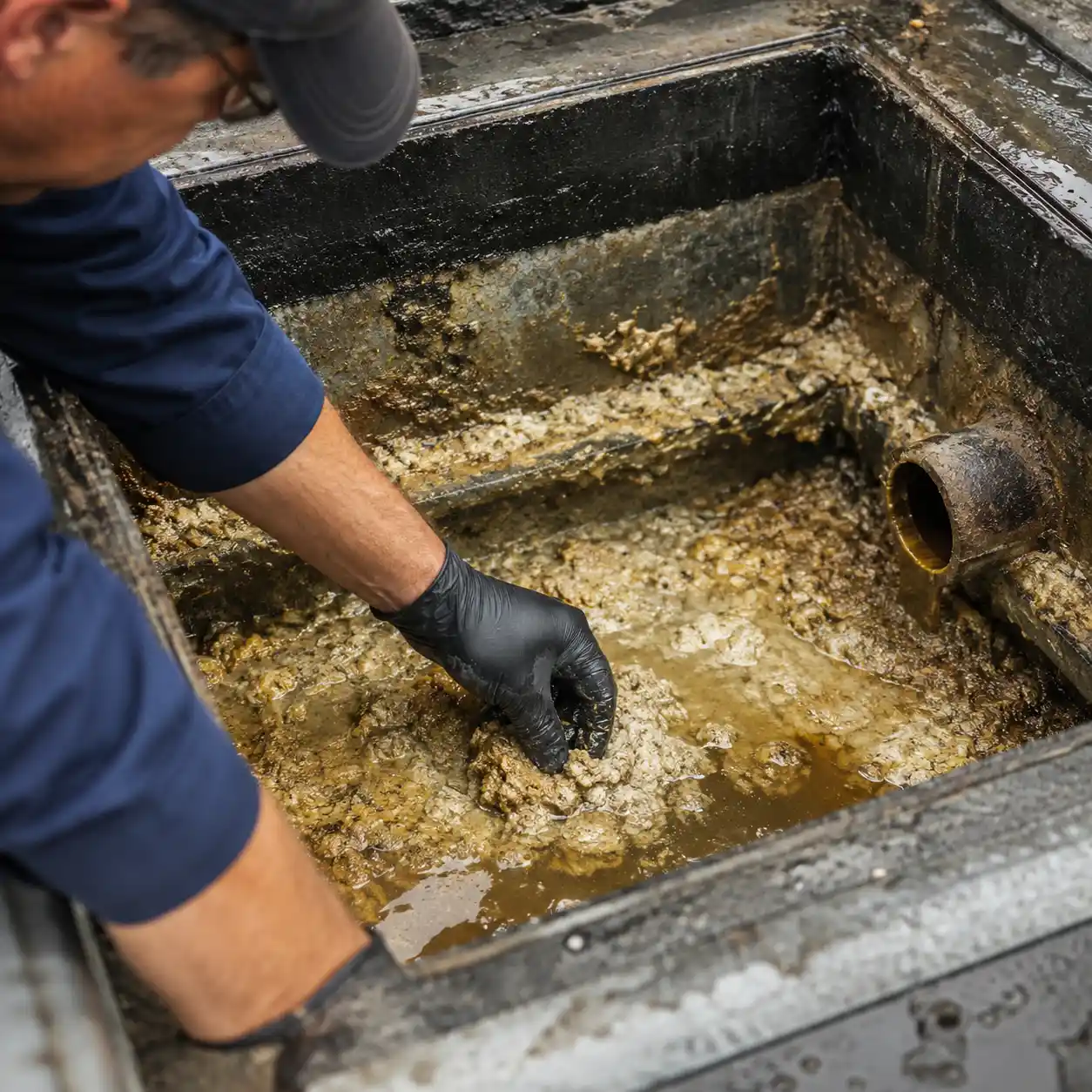
Signs Your Grease Trap Is Overdue
A trap in trouble usually shows it before a full failure. Watch for:
- Slow-draining sinks or floor drains in the kitchen
- A grease or sewage odor near the trap or drain lines
- Visible grease buildup at or near the trap access lid
- Drains backing up during peak service hours
- A health inspector flagging maintenance records during a visit
If you’re seeing any of these during a lunch or dinner rush, it’s worth getting ahead of it before it becomes a shutdown-level problem.
Booking Grease Trap Service, Start to Finish
You Schedule Service
Tell us your kitchen’s typical volume and any current symptoms.
We Confirm Access
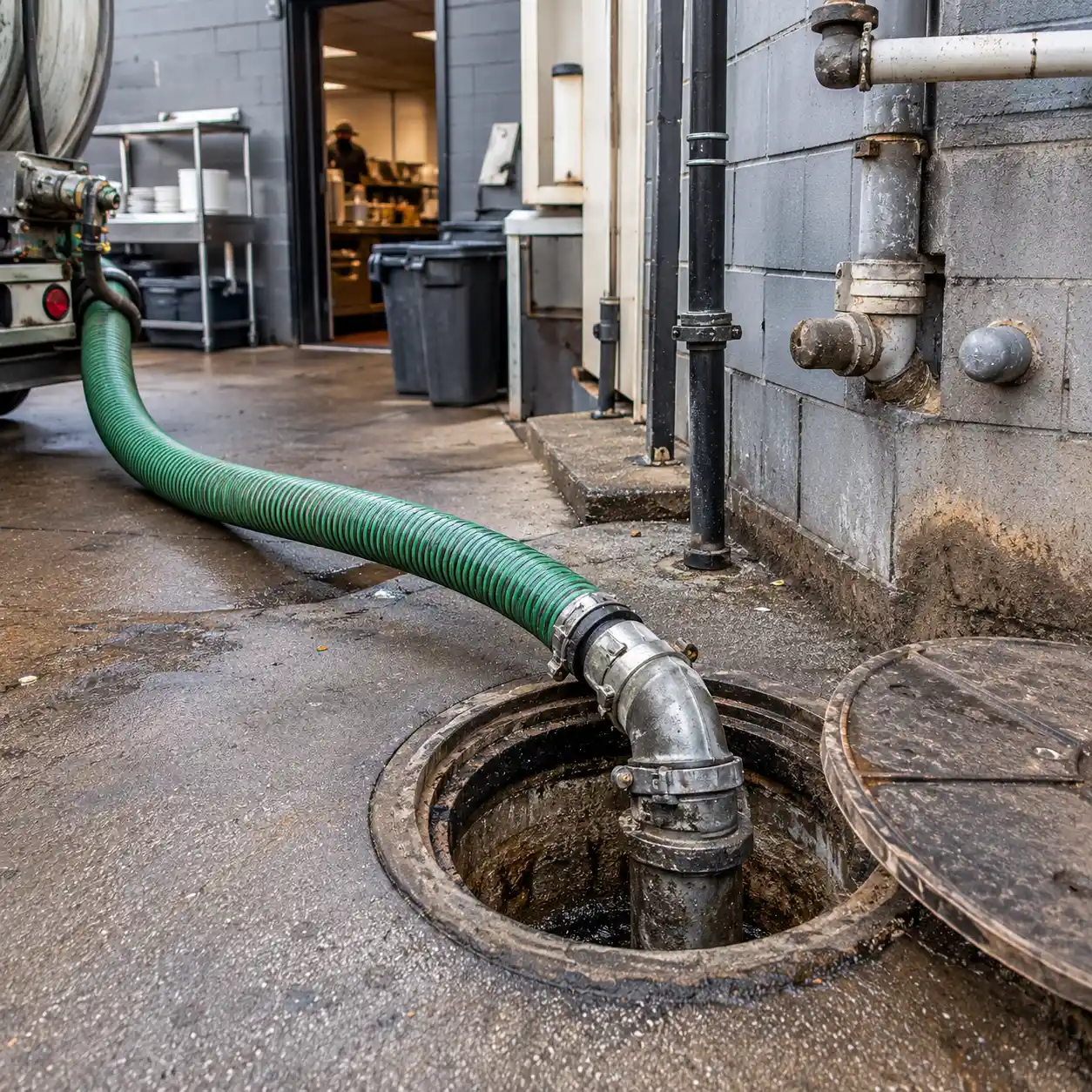
Most commercial traps are outdoors or in a back-of-house area with straightforward access.
We Clean the Trap
Plan on 30 to 45 minutes for a standard commercial trap, longer for larger or heavily neglected units.
You Get Documentation
Service records land in your inbox, ready for your files or an inspection.
What Affects Your Grease Trap Service Schedule
Kitchen type is the biggest factor — a fryer-heavy menu produces FOG faster than one built around salads and sandwiches. Seating capacity and meals served per day matter too, along with whether the trap was sized correctly for the kitchen in the first place. An undersized trap needs more frequent service no matter how careful staff are about scraping plates and using strainers.
We can evaluate an existing setup and tell you honestly whether the trap itself, not just the schedule, needs a second look.
Multi-Location and Franchise Accounts
If you operate more than one location across Asheville or the surrounding counties, we can coordinate service schedules across all of them so you’re not tracking separate vendors or mismatched intervals property by property.
Consistent service history also matters if a location changes hands or comes up for health department review — having a documented maintenance trail on file saves a scramble later.
Reach out with your locations and typical volumes, and we’ll put together a schedule that works across your whole operation.
Grease Trap Questions We Hear Often
Yes — FOG causes the same problems in a septic system as it does in municipal sewer, and can clog or damage a drain field faster than typical household wastewater. If your kitchen is on septic, trap maintenance matters just as much, if not more.
It depends on seating capacity, meals served per day, and menu type. We can evaluate an existing kitchen or a new build and recommend sizing that won’t need constant servicing.
Basic exterior maintenance is fine, but full removal and disposal of accumulated FOG requires proper equipment and disposal handling most kitchens don’t have on-site. Attempting a full clean without the right setup usually just creates a mess without solving the underlying capacity issue.
The trap keeps filling regardless, and a missed visit often means the next one takes longer and costs more since there’s simply more to remove. It also raises the odds of a backup happening before the next scheduled visit.
Yes, every service visit comes with documentation you can keep on file or show an inspector directly.
Grease Trap Service Across Buncombe and Neighboring Counties
We service commercial kitchens throughout Buncombe County’s restaurant and brewery corridor, plus food service accounts in the closer parts of Henderson, Madison, and Haywood counties.
Send us your location and typical service volume, and we’ll set up a schedule that fits.
- Asheville and all of Buncombe County
- Fletcher — Henderson County
- Mars Hill — Madison County
- Waynesville — Haywood County
Other Septic Services We Offer
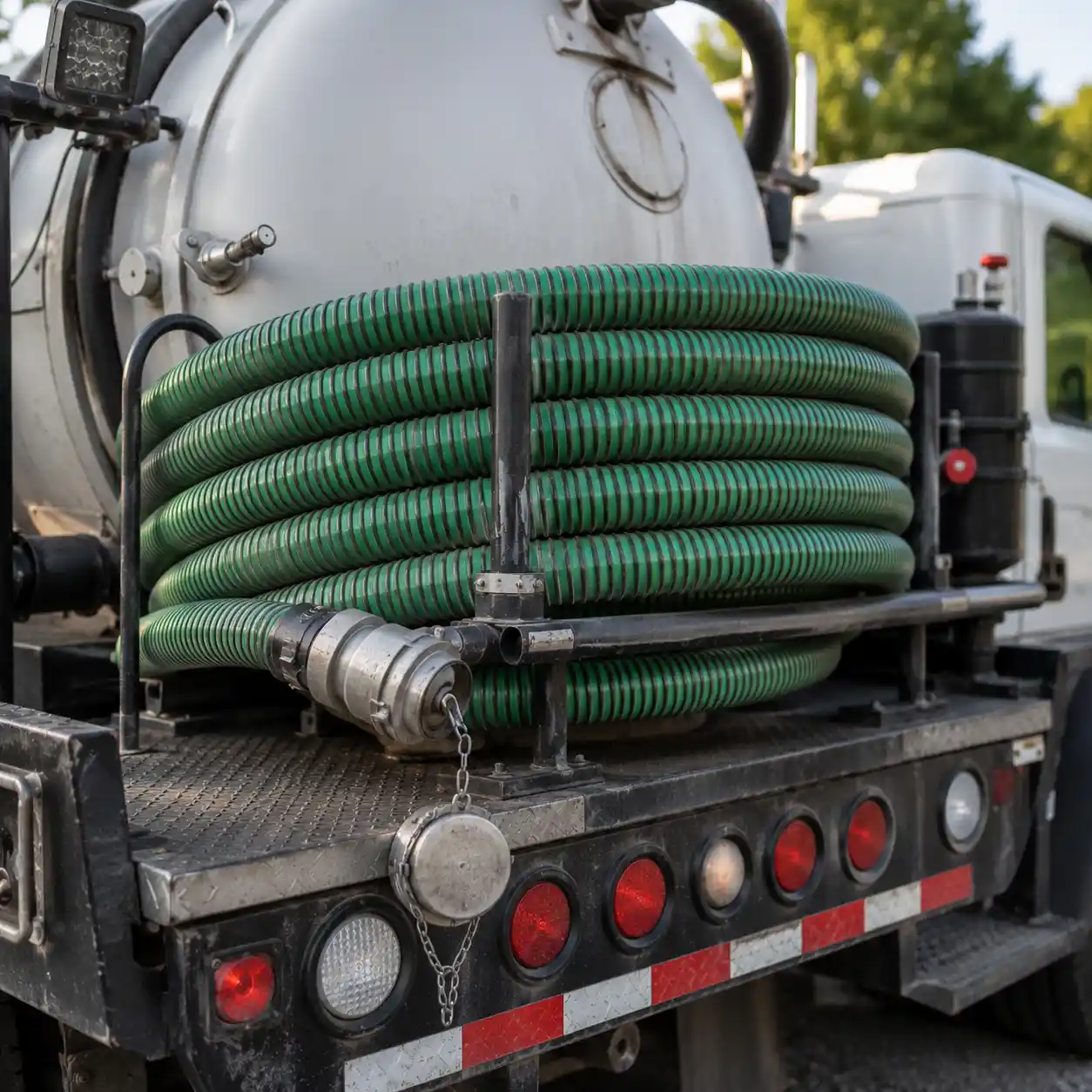
Septic Tank Pumping
For properties on septic rather than municipal sewer, tank pumping runs on its own separate schedule.
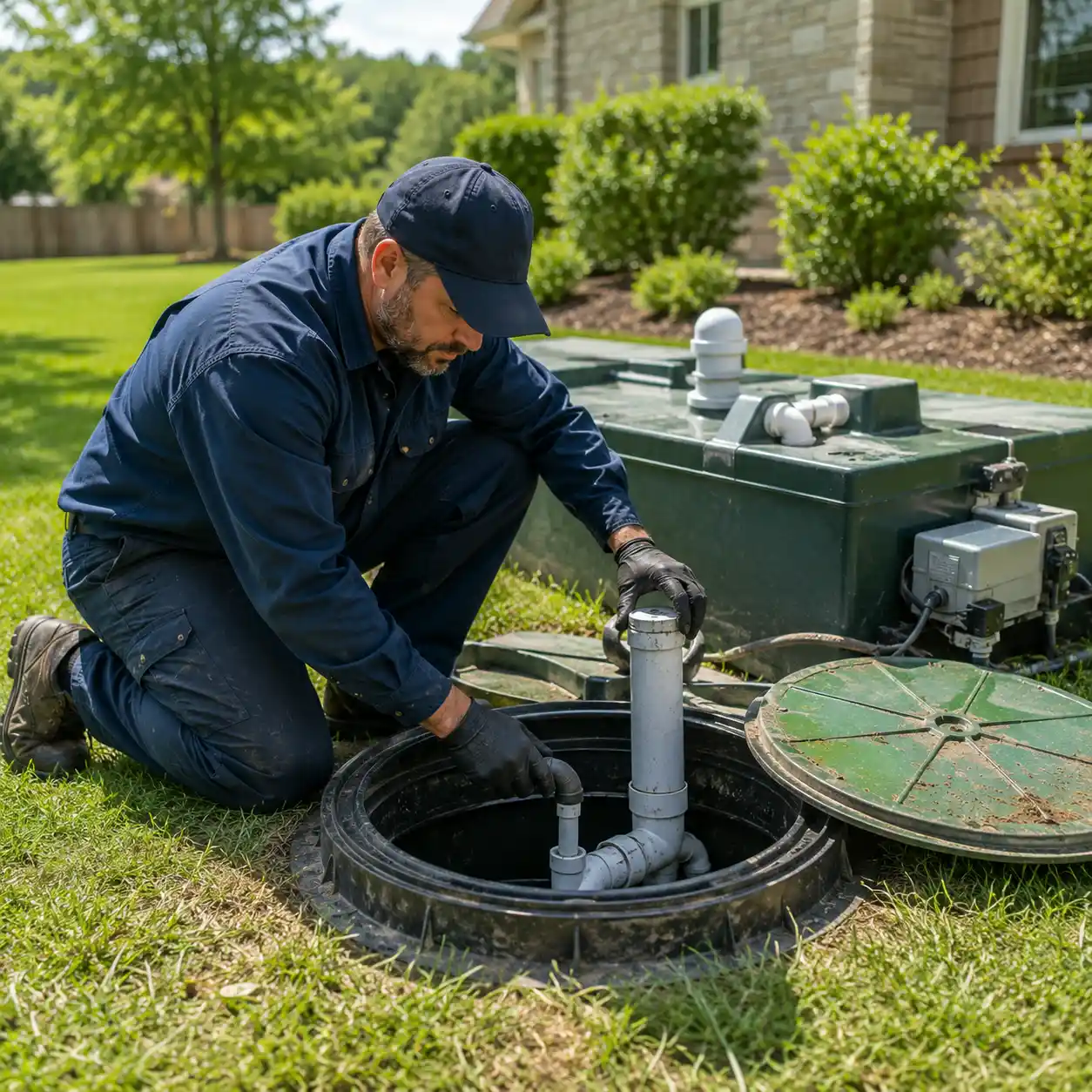
Septic Inspections
Combine a grease trap evaluation with a full system inspection for new locations.
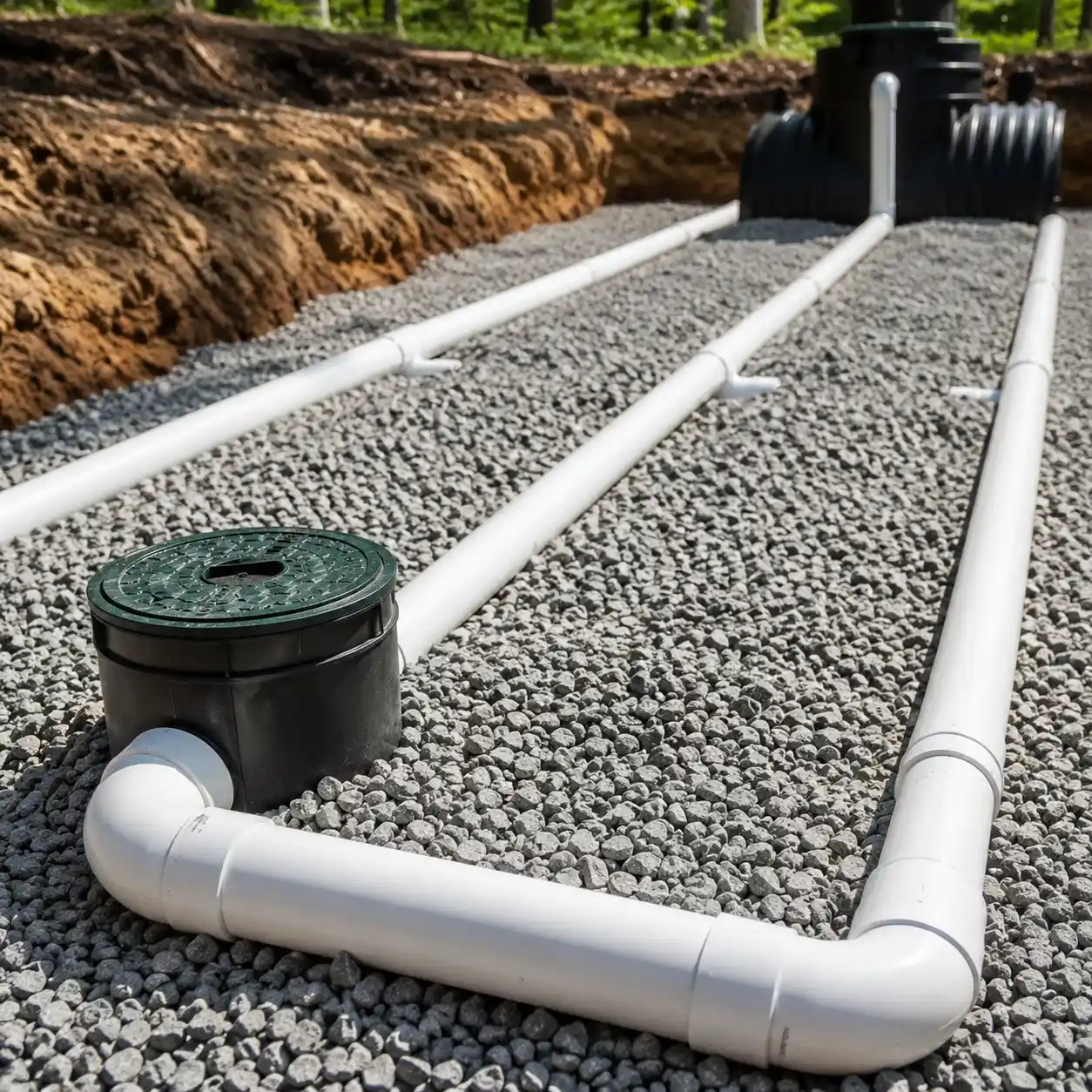
Drain Field Services
For septic properties, protecting the drain field starts with keeping FOG out of it.
Set Up Your Grease Trap Service Schedule
Whether it’s a first-time setup or you’re switching from another provider, fill out the form and we’ll get you scheduled.
- Full FOG removal
- Interior cleaning
- Flow function check
- Compliance documentation
- Multi-location scheduling
- Flexible timing around service hours
Tell Us About Your Needs
We’ll reach out to confirm your appointment details.