Slow Drains in Every Sink and Tub? Here’s What It Usually Means
One slow drain is usually just that drain. Slow drains in multiple fixtures at once point somewhere else entirely — usually the septic system itself. Here’s how to tell which part is actually causing it before you call anyone out.
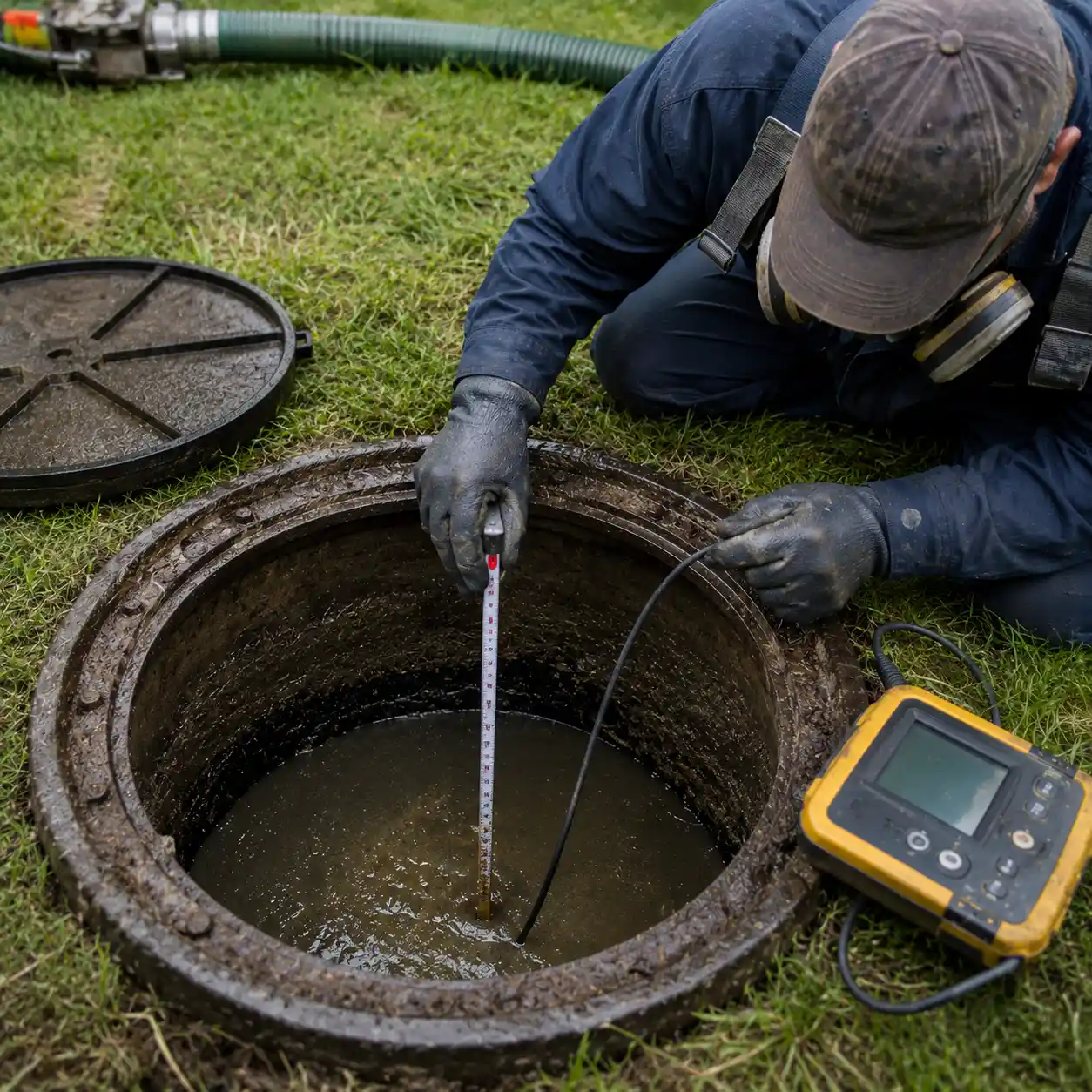
More Than One Slow Drain Is a Different Problem Than One
A single slow drain is almost always local — hair caught in a bathroom sink, grease built up in a kitchen line, something specific to that one fixture and nowhere else. When two or more drains in different parts of the house slow down around the same time, especially the lowest fixtures in the house first, that’s usually not a coincidence. It means something downstream, where all those lines eventually meet, is the actual bottleneck.
For a house on a septic system, “downstream” means the tank, the line running to it, or the drain field beyond it — and figuring out which one is actually slowing things down changes what the fix looks like, and what it costs. The good news is the pattern of slow drains you’re seeing usually points fairly clearly toward one of three general areas.
Before getting into causes, it helps to rule one thing out: is this actually a “multiple drain” problem, or does it just feel that way because you happened to notice two slow fixtures on the same day? Run water at each fixture separately, one at a time, and time roughly how long it takes to clear. If every fixture is genuinely slower than it used to be, you’re dealing with a system-wide issue. If one drain is dramatically worse than the others, you might actually be looking at one local clog plus one unrelated, more minor slowdown — which is a different, usually simpler, situation.
It’s also worth checking whether the slowdown affects both hot and cold water fixtures equally, or seems worse with one than the other. This rarely matters for a septic-side cause, but it can help rule out an unrelated plumbing issue — a water heater problem, for instance, wouldn’t affect drainage at all, while a genuine septic-side slowdown affects drainage regardless of water temperature.
Tank-Side Causes
An Overdue Tank
When a tank’s sludge and scum layers build up past a certain point, there’s less usable volume left for incoming wastewater to sit and separate properly before flowing out. The practical effect is that water backs up slightly at the tank end of the system, which shows up as multiple drains running slower than usual, especially the lower fixtures in the house. This is usually the first thing worth checking, and it’s the easiest to fix — a routine pumping resolves it in most cases.
A Blocked Outlet Baffle
The outlet baffle is a piece inside the tank that keeps solids from washing out into the drain field while still letting clarified liquid pass through. If it gets partially blocked — by a buildup of scum or debris that’s worked its way into the wrong spot — it restricts flow leaving the tank, which backs pressure up into the house’s plumbing the same way an overdue tank does. It often gets caught and cleared during a routine pumping or inspection, which is one more reason not to skip those visits.
A Sudden Spike in Household Water Use
Sometimes nothing’s actually broken — the tank just doesn’t have time to properly separate solids from liquid before the next surge of water arrives. A house full of holiday guests, several loads of laundry run back-to-back, or a new appliance like a larger washing machine can all push more water through the tank in a shorter window than it’s designed to comfortably handle. Drains slow down temporarily as a result, and usually recover once water use settles back to normal — though if it keeps happening, it may point toward a tank that’s simply undersized for how the household actually lives now.
Drain Field Causes
A Field Nearing Capacity
If the tank’s in decent shape but drains are still slow, the drain field is the next place to look. A field that’s absorbed close to its capacity — whether from age, being undersized for the property, or simply years of heavy use — has less room to accept new effluent, and that backs pressure up through the whole system all the way to your fixtures. This is one of the more common causes we find on older Buncombe County properties where the original field was sized for a smaller household than currently lives there.
Root Intrusion Into Field Lines
Tree and shrub roots are drawn to the moisture inside a drain field’s perforated pipes, and over time they can work their way into a joint or crack and partially block the line. A partially blocked field line reduces how much water the field can actually accept at once, which shows up as slow drains, especially after multiple fixtures are used close together in a short window.
A Seasonally High Water Table
During extended wet stretches, the water table around a drain field can rise enough to reduce how much room the soil has left to absorb additional effluent — the ground is already holding as much water as it can from rainfall alone. This tends to produce slow drains that come and go with the season or with recent weather rather than staying constant, which is a useful clue that the field, not a mechanical failure, is the more likely explanation.
Line & Plumbing Causes
A Partial Blockage in the Main Line
The main line running from the house to the tank can develop a partial blockage from grease buildup, a foreign object, or root intrusion of its own, separate from anything happening at the tank or field. This tends to affect every drain in the house roughly equally, since it sits upstream of everything else, and it’s often confirmed with a camera inspection rather than guesswork.
A Line With Improper Slope or a Low Spot
Occasionally the issue isn’t a blockage at all, but a section of pipe that’s settled unevenly over time and created a low spot where water pools instead of flowing continuously downhill toward the tank. This is less common but does show up on older properties, especially where ground settling has occurred near the house’s foundation.
Multiple Drains Running Slow?
That’s usually a system-wide clue, not a coincidence — let’s find out what it’s telling you.
Schedule a Diagnostic Visit
Serving Asheville and all of Western North Carolina.
What Slow Drains Together Usually Mean
Taken together, the pattern of which drains are affected and how severely tells us a lot before we even arrive. Every fixture in the house running slow points upstream, toward the tank or the main line. Only the lowest fixtures — a basement floor drain, a ground-floor shower — running slow while upstairs fixtures work fine often points toward the tank or field being close to capacity, since gravity means the lowest points feel backup pressure first.
It’s also worth noting how gradual or sudden the change was. A slow, months-long decline usually points toward a tank or field problem building up over time. A sudden change over a day or two is more often a specific blockage — a root intrusion reaching a critical point, or something that got flushed that shouldn’t have been.
One more thing worth paying attention to: sound. A gurgle from a drain right after you flush a toilet elsewhere in the house is a classic sign of a shared line issue — air trying to find its way around a partial blockage. If you’re hearing that alongside the slow drains, mention it when you call, since it’s a useful diagnostic clue on its own.
Getting It Diagnosed Properly
Because several different problems produce a similar symptom, the fastest way to an actual fix is a visit that checks the tank first, then the field, then the lines if neither of those turns anything up. We measure the tank’s condition, check baffles, and can run a camera through the main line if a blockage is suspected — rather than assuming the most expensive possibility and quoting from there.
If you’re dealing with slow drains across more than one fixture right now, don’t wait for it to turn into an actual backup before getting it looked at. Multiple slow drains are the system telling you something’s already changed — catching it at this stage is almost always cheaper and less disruptive than waiting.
It’s also a reasonable moment to check your own records, if you keep them. Knowing roughly when the tank was last pumped, whether the drain field has ever been evaluated, and how old the system is overall gives whoever diagnoses the problem a real head start, rather than starting completely from scratch on a system nobody’s looked at in years.
Finally, resist the urge to try a chemical drain opener on multiple fixtures at once as a first response. Those products are formulated for local pipe clogs, not tank or field problems, and they don’t address any of the six causes covered above. On a septic system specifically, some harsh drain chemicals can also disrupt the bacterial balance the tank depends on to break down solids, which is one more reason to get an actual diagnosis rather than reaching for a generic fix.
Get Your Slow Drains Diagnosed
Whether it turns out to be the tank, the field, or the line between them, fill out the form and we’ll get it checked properly.
- Tank condition check
- Baffle inspection
- Drain field evaluation
- Main line camera inspection
- Straightforward repair recommendations
- Serving all of Buncombe, Henderson, Madison & Haywood counties
Tell Us About Your Needs
We’ll reach out to confirm your appointment details.